
Google Stitch Loop: what the 24/7 product agent does and how to join
Stitch Loop is a Google Labs agent that watches your app's metrics and opens GitHub fixes for you. Waitlist only (Nov 18, 2026); AI Ultra users get priority.
Checked and updated 18 November 2026 at 21:20 UTC
Key points
- Stitch Loop, announced by Google Labs on November 18, 2026, is a long-running AI agent that connects to your code on GitHub and your live product data, then keeps proposing and building fixes until a goal is met.
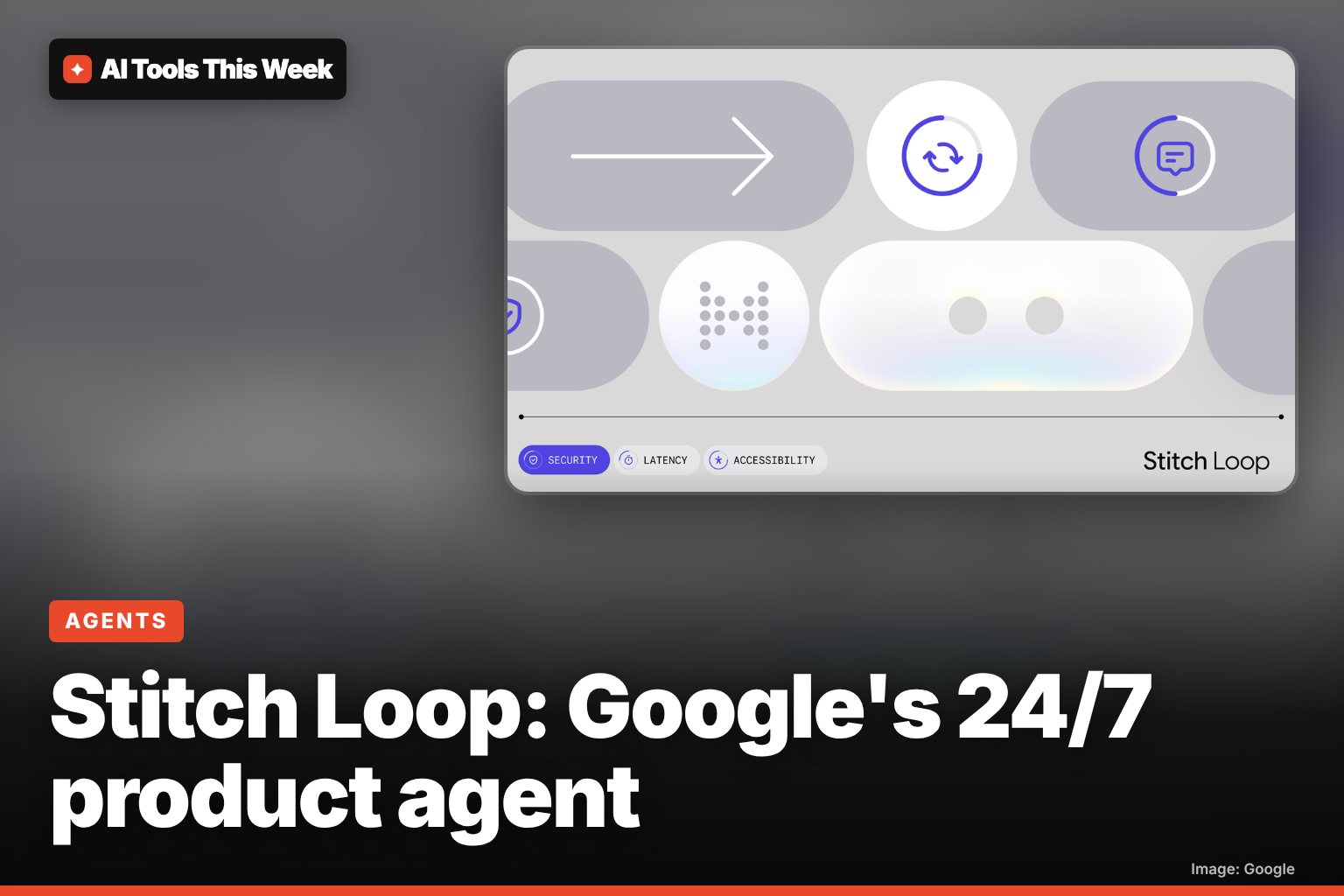
- It comes with three built-in loops (security, speed and accessibility), and you can add your own, such as raising checkout conversion. Nothing merges until you approve the pull request.
- It is waitlist only for now, open to everyone worldwide, with eligible Google AI Ultra subscribers getting priority. Google hasn't published a price.
Stitch Loop is a new Google Labs AI agent that connects to your app's code and live usage data, spots what needs fixing (security holes, slow pages, people dropping off at signup) and keeps building fixes as GitHub pull requests until your goal is met. It was announced on November 18, 2026 and is waitlist only for now, with Google AI Ultra subscribers first in line.
Google hasn't announced a price.
What it does
Google's pitch is simple: coding agents stop working once your code is merged, but the real work on a product starts after launch. Stitch Loop is meant to keep going "24/7".
You connect it to:
- Your code on GitHub.
- Your product data: logs, user behaviour and feedback, through more than 180 integrations, your own MCP servers, or file uploads from the command line.
It then runs "loops" aimed at a measurable goal. Each loop has four steps:
| Step | What happens |
|---|---|
| 1. Suggestions | It points out chances to move toward your goal, with evidence from your product |
| 2. Solutions | It offers one or more fixes, with trade-offs, scope and design options where relevant |
| 3. Build | Once you pick one, it writes the code in an isolated cloud sandbox and opens a GitHub pull request, sometimes with screenshots or videos |
| 4. Reflect | It watches your live numbers, learns from what worked, and keeps watching after the goal is met in case the metric slips |
You always have the last word: Google says nothing merges until you review the pull request.
The built-in loops
Three loops come out of the box, and you can add your own:
- Security: works with CodeMender, Google DeepMind's autonomous code-security agent, to scan for vulnerabilities and propose fixes with evidence.
- Latency: finding what makes your product slow.
- Accessibility: making the product easier to use for everyone.
- Custom loops: Google's example is improving checkout conversion.
Works with your other tools
Stitch Loop is not tied to one coding agent. Google says other agents, including its own Antigravity, can pull Stitch Loop's product context through the Stitch command-line tool and MCP. In Slack, you can mention @stitch to get a daily digest of insights and create new loops.
Who can use it
- Waitlist: open from November 18 to all users worldwide at stitch.google.com/loop/waitlist.
- Priority: eligible Google AI Ultra subscribers.
- Price: not announced.
It is aimed at small teams who ship software, not at everyday chatbot users. If you are new to the idea, our guide to what an AI agent is explains the basics, and Microsoft's Ignite 2026 announcements cover a rival set of agents for businesses launched this week. Stitch Loop's security loop builds on the same skills Google highlights in Gemini 4 Carbon.
How to sign up
- Go to stitch.google.com/loop/waitlist.
- Sign in with your Google account (an AI Ultra account gets priority).
- Once you're in, connect GitHub and your data sources, then turn on the default loops or create your own.
Google asks testers to share feedback in the Google Labs Discord.
Frequently asked questions
Is Google Stitch Loop free?
Google hasn't said. On November 18, 2026 it only opened a waitlist at stitch.google.com/loop/waitlist, open to all users globally, with priority for eligible Google AI Ultra subscribers. No price has been published.
What is the difference between Stitch and Stitch Loop?
Stitch is Google Labs' tool for turning an idea into a working interface. Stitch Loop takes over after launch - it watches your live product, finds problems like slow pages or security holes, and opens code changes to fix them.
Can Stitch Loop change my code without asking?
No. Google says it writes code in an isolated cloud sandbox and opens a GitHub pull request for your approval, and nothing merges until you review it.
Sources
Related
Gemini computer use on Mac: what it does and who gets it
Gemini for Mac can now click, type and fill forms in your apps in a background window. US English only, Apple Silicon, AI Plus, Pro or Ultra plan.
Gemini Tasks is now free: calls, shopping and how to use it
Tasks in Gemini is free in the US, Japan, Korea, Canada, Australia and India. It can call businesses, check out with Google Pay and book appointments.
Google: hackers now use AI agents that attack on their own
Google's Nov 16 threat report says hackers now run AI agents that turn software patches into attacks with no human involved. What it found and how to stay safe.