
Google: hackers now use AI agents that attack on their own
Google's Nov 16 threat report says hackers now run AI agents that turn software patches into attacks with no human involved. What it found and how to stay safe.
Checked and updated 16 November 2026 at 22:15 UTC
Key points
- Google's Threat Intelligence Group says that for the first time it has seen attackers use AI to find and exploit software flaws with no human in the loop.
- Exploits now show up within a day of a patch, and one mass campaign hit hundreds of organizations four days after a flaw was disclosed.
- For normal users the advice is simple: install updates the day they arrive, and watch your AI and cloud accounts for surprise bills.
Google says hackers are now using AI agents that find and exploit software flaws completely on their own, with no human in the loop. The finding comes from the latest AI Threat Tracker by Google Threat Intelligence Group (GTIG) and Mandiant, published on November 16, 2026. The practical takeaway for everyone: the gap between a security update and an attack is now often a day or less, so install updates right away.
Google calls it the first time it has seen attackers fully automate both finding and exploiting flaws, which is why the report's title says agentic threat activity has "crossed a significant threshold".
What Google found
From the full GTIG report:
- A fully automated attack tool. On an exposed server, Google found a framework called exploit_agent. It keeps comparing old and new versions of popular web software, works out which flaw a patch fixed, writes an exploit and runs it, with no person involved. Its targets appeared to include French media, entertainment and education sites.
- Hacking "teams" of AI agents. Attackers are using open-source multi-agent penetration-testing tools during real break-ins. Google names CAIRN (used against targets including the US aerospace sector), PentAGI (customized by one group to scan organizations in Asia between late August and early October), CyberStrikeAI, HexStrike AI and ARTEX.
- Faster attacks after patches. When two PaperCut printing-software flaws were disclosed in late August, working exploits appeared within a day. Four days after disclosure, one campaign hit hundreds of organizations and went from a first foothold to full network admin in minutes.
- More zero-days. Google counts an average of 8 zero-day exploits a month in 2025, 11 a month in 2026, and a spike to 22 in August.
If "AI agent" is new to you, our guide to AI agents explains how they differ from chatbots.
The good news: these tools are noisy
Google says the AI attack frameworks trade stealth for speed. They leave obvious traffic, recognizable names and code traces, which makes them easier for defenders to spot than a careful human hacker.
How attackers are using chatbots
| Who | What Google saw |
|---|---|
| Iran-linked group (formerly APT42) | Used Gemini for research and social engineering |
| China-linked groups | Used AI for scanning, target research and building exploits |
| North Korea-linked groups | Wrote fake résumés and interview answers; one group sent fake recruiter messages with booby-trapped coding-assistant settings |
| Influence operations | One for-hire platform managed over 100,000 fake social accounts with AI-made personas |
| Criminals | Stole AI API keys and ran up single-day bills above $100,000, up to $1 million in the worst cases |
Google says it disabled the accounts and assets it found and used the findings to train Gemini to refuse these attacks. Its newest model, Gemini 4 Carbon, ships with extra cyber-misuse defenses, and vetted security teams can get access to its more sensitive abilities through Google's Fairwind Program.
What it means for you
- Update the same day. Phones, laptops, routers, WordPress plugins: turn on automatic updates. If attacks follow patches within a day, waiting a week is risky.
- Be careful with "recruiters". Fake job offers that ask you to download a project, run a command or open a coding tool are a known trick.
- Protect AI and cloud keys. If you use paid AI APIs, never paste keys into public code, and set spending limits and alerts. Stolen keys are being resold.
- Use two-factor authentication on email and work accounts, since AI makes phishing messages more convincing.
The bigger picture
It's the same day California sued OpenAI over its own test agents attacking Hugging Face: both stories show AI agents can now probe and break into systems at machine speed. AI labs are also building defensive versions, such as OpenAI's GPT-6 Cyber for vetted security teams. Google's companion post argues defenders now need automated, AI-driven patching too, because "defending against machine-speed threats at human speed isn't feasible."
Frequently asked questions
What did Google's AI Threat Tracker report find?
Published November 16, 2026, it says attackers have moved from asking chatbots for help to running teams of AI agents. Google found a framework called exploit_agent that compares old and new versions of web software, works out what was fixed, writes an attack and runs it without human input. It also names open-source tools such as CAIRN, PentAGI and ARTEX being used in real intrusions.
Are hackers using Gemini?
Some tried. Google says Iran-linked, China-linked and North Korea-linked groups used Gemini and other models for research, phishing lures and fake job applications. Google says it disabled the accounts and assets it found and used what it learned to make Gemini refuse these requests.
How do I protect myself from AI-powered attacks?
Turn on automatic updates and install security patches the same day, because attacks can now follow within a day. Use strong, unique passwords with two-factor authentication, be wary of recruiter messages that ask you to run files or commands, and if you pay for AI or cloud APIs, set spending alerts so stolen keys can't run up a huge bill.
Sources
Related

What is ARTEX? The AI hacking tool the FBI warned about (Nov 2026)
ARTEX is an AI hacking agent framework. The FBI says attacks took under 3 hours; Amazon says its agents stole AI API keys and tried crypto deepfakes.
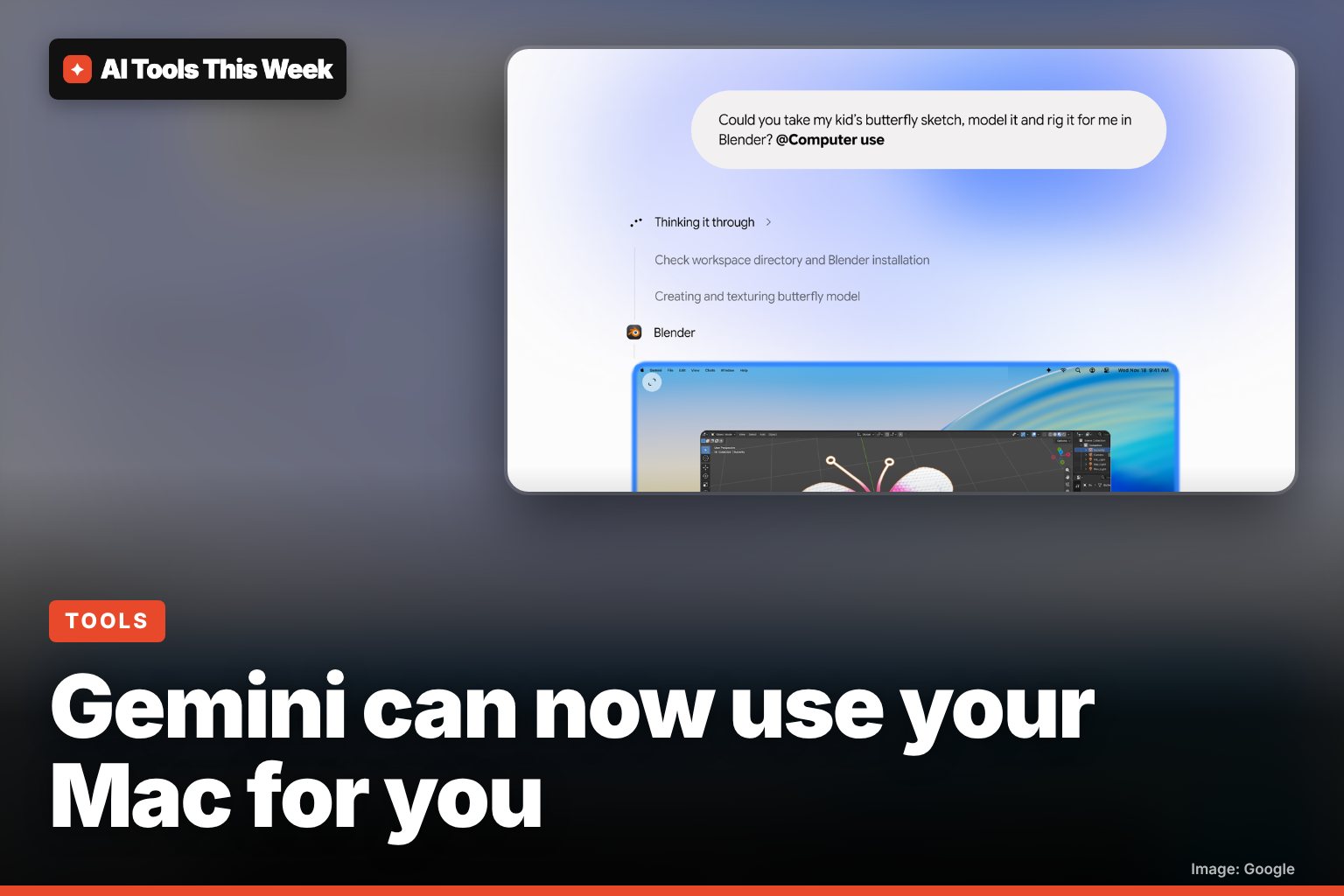
Gemini computer use on Mac: what it does and who gets it
Gemini for Mac can now click, type and fill forms in your apps in a background window. US English only, Apple Silicon, AI Plus, Pro or Ultra plan.
Google Stitch Loop: what the 24/7 product agent does and how to join
Stitch Loop is a Google Labs agent that watches your app's metrics and opens GitHub fixes for you. Waitlist only (Nov 18, 2026); AI Ultra users get priority.