
Canada AI Compute Access Fund: up to 80% of costs, how to apply
Canada's AI Compute Access Fund grows to $1 billion and covers up to 80% of cloud AI compute from sovereign providers. Apply by Dec 17, 2026.
Checked and updated 28 November 2026 at 03:20 UTC
Key points
- Canada added $700 million to its AI Compute Access Fund, bringing it to $1 billion. It pays part of small and medium-sized businesses' cloud AI compute bills.
- New rates: up to 80% of eligible costs if you buy from a Canadian-owned 'sovereign' provider, up to 50% from other providers with data centres in Canada. Projects must be $100,000 to $5 million.
- The open call is for health and life sciences: statement of interest by December 17, 2026, full application by January 4, 2027 (11:59 p.m. ET).
Canada's AI Compute Access Fund now has $1 billion and pays up to 80% of a small or medium-sized business's cloud AI compute costs, as long as the computing is bought from a Canadian-owned "sovereign" provider. Other providers with data centres in Canada qualify for up to 50%. The current call is open to health and life sciences projects, with statements of interest due December 17, 2026.
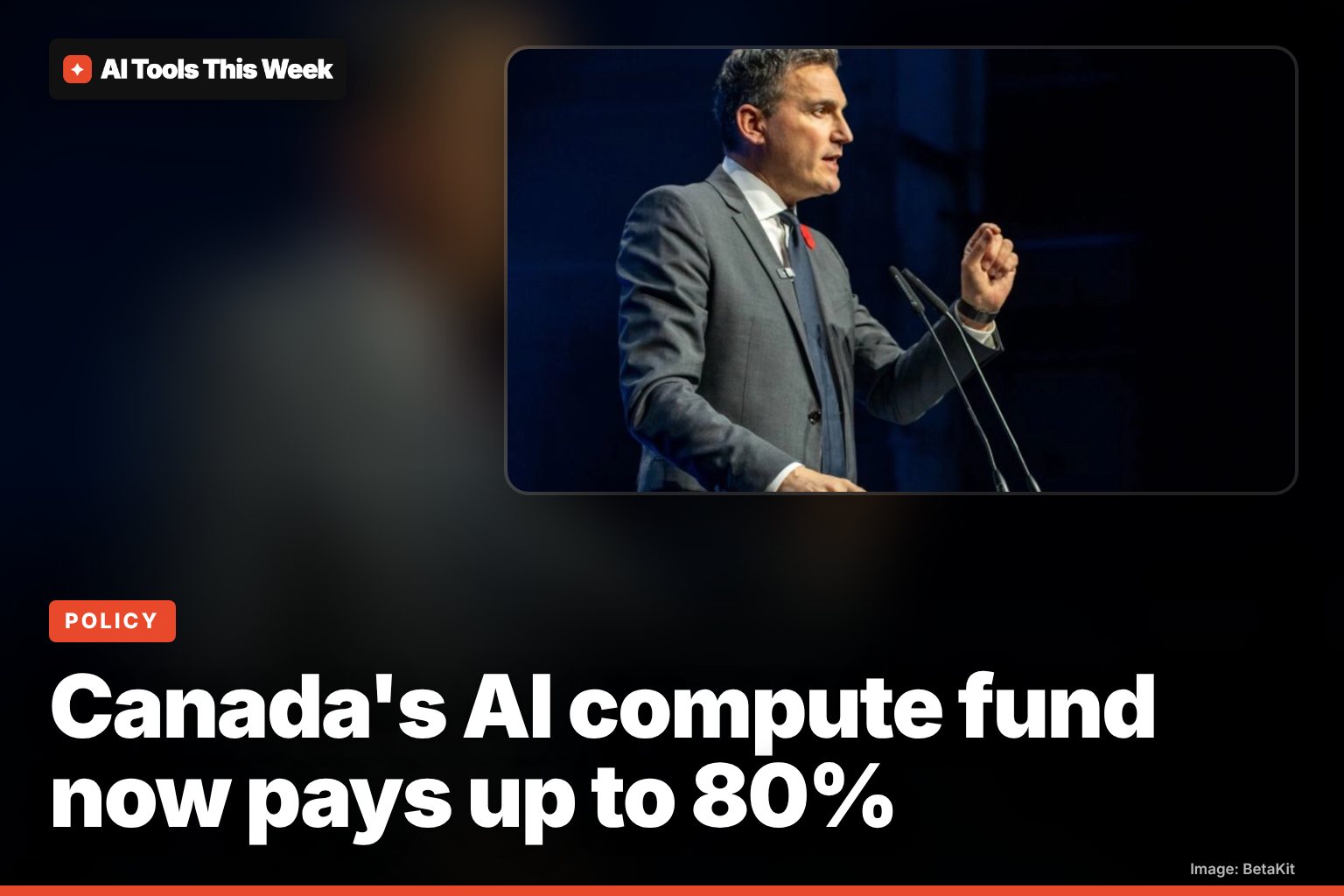
AI Minister Evan Solomon announced the expansion in Toronto on November 26, 2026, BetaKit reports, and the government's program page was updated the same day.
What changed
| Before | Now | |
|---|---|---|
| Total fund | Up to $300 million (announced Dec 2024) | $1 billion (+$700 million) |
| Sovereign (Canadian-owned) provider | – | Up to 80% of eligible costs |
| Other Canadian-based provider | – | Up to 50% of eligible costs |
| Eligible project size | $100,000 to $5 million | $100,000 to $5 million, costs up to March 31, 2030 |
The $700 million comes from Canada's National AI Strategy, "AI for All". Solomon said the first round drew around 1,500 requests when officials expected a couple of hundred, according to BetaKit. So far the fund has committed more than $118 million to 89 companies, including 45 firms sharing more than $52 million in this latest round.
Who can apply
Per the program page, the fund targets Canadian AI small and medium-sized businesses doing research, development or compute projects with a concrete path to selling a product. BetaKit lists the main criteria as:
- incorporated in Canada with fewer than 500 employees,
- generating revenue or funded to Series A,
- building AI products or services, with a commercialization plan,
- a compute service agreement (the program page says you can apply without one, but need an active contract before signing a funding agreement).
Right now only health and life sciences proposals are accepted.
Sovereign vs Canadian-based providers
- Sovereign provider (up to 80%): infrastructure in Canada, data processed and stored in Canada, incorporated in Canada, Canadian-owned, and governance and decisions made in Canada.
- Canadian-based provider (up to 50%): infrastructure in Canada, data processed and stored in Canada, incorporated in Canada.
You can mix both kinds of provider in one project.
How to apply (step by step)
- Create an account on the program page (link in sources).
- By December 17, 2026, 11:59 p.m. ET: submit a statement of interest with basic business information, a project overview and supporting documents such as financial statements, a budget and a commercialization plan.
- If you pass the eligibility check, you'll be invited to a full application.
- By January 4, 2027, 11:59 p.m. ET: submit the full application with details on your project, commercialization plan and benefits to Canada.
- The government assesses market potential, risk, technology readiness and benefits to Canada, then picks a balanced portfolio. Funding may be non-repayable, conditionally repayable or repayable.
If you applied before and were turned down, you can apply again if you meet this call's rules.
What it means
For Canadian startups, compute is often the biggest bill, and 80% coverage changes the maths: $100,000 of eligible sovereign compute would cost the company about $20,000. It also pushes money toward Canadian-owned data centres rather than the big US clouds, part of the same global fight over AI infrastructure behind stories like Anthropic's power report and AWS re:Invent 2026. For background on why governments care where models are built and run, see AI distillation explained.
AI Tools This Week is not affiliated with the Government of Canada.
Frequently asked questions
Who can apply to the AI Compute Access Fund?
Canadian small and medium-sized businesses developing AI products or services with a path to commercialization. BetaKit reports the criteria as Canadian-incorporated, fewer than 500 employees, and either generating revenue or Series A-funded. The current call only accepts health and life sciences projects.
What is a sovereign compute provider?
Under the program rules, a sovereign provider runs its infrastructure in Canada, processes and stores data in Canada, is incorporated in Canada, is Canadian-owned and keeps governance in Canada. A 'Canadian-based' provider only has to meet the first three, and qualifies for up to 50% instead of 80%.
Do I have to pay the money back?
It depends. Funding can be non-repayable, conditionally repayable (waived if you hit milestones such as commercialization) or repayable. The government decides which type during the assessment.
Sources
Related

Donald Knuth stops reading error reports after AI flood
Since Nov 25, 2026, Donald Knuth won't read new error reports for his books: LLM-made reports, mostly repeats, outpaced him. What it means.
Character.AI chat auction Dec 1: what happens to your chats
Character.AI's Dec 1, 2026 auction could sell chats from 21M+ US accounts, 2.1M of them minors. 42 attorneys general object. How to delete your account.

Grok lawsuit: Virginia and Oregon sue SpaceX over AI images
Virginia and Oregon sued SpaceX, owner of xAI and Grok, on Nov 23, 2026, saying Grok made sexualized images of real people and children without consent.