
AI distillation explained: why Anthropic and OpenAI ban accounts
Distillation is training an AI on another model's answers. Anthropic and OpenAI forbid it, detect it with classifiers and ban accounts. What counts.
Checked and updated 24 November 2026 at 21:50 UTC
Key points
- Distillation is training a new AI model on the answers and reasoning of an existing one. Anthropic's and OpenAI's terms both forbid using their output to build competing models.
- Anthropic (October 12, 2026) and OpenAI (November 20, 2026) both describe classifiers that spot extraction attempts, tighter rules on who can read a model's reasoning, and mass account bans. Anthropic says it bans flagged accounts, often within two hours.
- On November 24 a developer on Hacker News said Anthropic accused their company of distilling and gave them 24 hours to respond. Anthropic says its classifier wrongly flags fewer than 0.1% of requests.
Distillation means training your own AI model on the answers of someone else's model, and both Anthropic and OpenAI now actively hunt for it and ban the accounts involved. Their terms of service forbid using Claude or ChatGPT output to build a competing model, and both companies have published how they detect and block it.
The topic hit Hacker News on November 24, 2026, when a developer wrote that Anthropic had accused their company of distillation and given them 24 hours to prove otherwise. The post drew 175 points and over 130 comments.
What distillation is
A big "teacher" model answers lots of questions. Its answers, and especially its step-by-step reasoning, become training data for a smaller "student" model, which learns to copy the teacher's skills for a fraction of the cost. Labs do this legally with their own models all the time.
Anthropic calls the hostile version distillation attacks: covert, industrial-scale campaigns, often run through networks of fake accounts, to copy a model's abilities without permission. OpenAI's term is adversarial distillation, and it stresses that a copied model can run without the original's safety protections, for example around cybersecurity or biology.
What each company is doing
| Anthropic | OpenAI | |
|---|---|---|
| Announced | October 12, 2026 | November 20, 2026 |
| Detection | Two-stage classifier on Sonnet 5.5, Opus 5 and 5.5, Fable 5 and 5.1 | Input and output classifiers, plus models trained to refuse extraction |
| Reasoning access | Reasoning summarized for users; full reasoning only visible to the organization that produced it | Protected reasoning tied to its own conversation; older models can't read GPT-6.2 Astra or Sol reasoning |
| Enforcement | Stricter limits, then bans, often within two hours | Weekly actions against thousands to tens of thousands of accounts |
| Reported effect | Data harvested by distillers down 90–99% | Reasoning-extraction success down from 54.0% to 0.2% in red-teaming |
Anthropic also says that since September 24 it charges for requests its safeguards block before Claude answers, in areas including distillation. OpenAI says it shares warning signs with other AI providers and backs US legislation to sanction foreign actors who extract American AI capabilities.
What the rules actually say
- Anthropic (Commercial Terms, section D.4): customers may not use the services to build a competing product, "including to train competing AI models", or reverse engineer or duplicate the services. Anthropic can suspend access for breaking this.
- OpenAI (Terms of Use): you may not use output to develop models that compete with OpenAI, or automatically extract data or output.
Running your own app's test suite or benchmarks against an API is not the same as training a model, but heavy, repetitive automated traffic can look similar to a classifier.
If you get flagged
Anthropic puts its false-positive rate below 0.1% of requests, and its post doesn't describe an appeals process. If you're a business using these APIs:
- Answer the notice quickly and in writing.
- Explain your automated traffic (evals, regression tests, batch jobs) and show you don't train models.
- Avoid prompts that ask the model to print its earlier hidden reasoning word for word. Both companies treat that as an extraction attempt.
For everyday users, almost nothing changes. For the bigger picture, see our coverage of the Anthropic IPO, GPT-6.2 Astra and Sol and OpenAI and Cisco's Shirudo security tool.
AI Tools This Week is not affiliated with Anthropic or OpenAI.
Frequently asked questions
What is AI model distillation?
It means using a large model's outputs, such as answers and step-by-step reasoning, as training data for another model so the new one copies its skills more cheaply. Labs do it with their own models all the time. It becomes a problem when someone does it to a competitor's model without permission.
Is it against the rules to distill Claude or ChatGPT?
Yes. Anthropic's commercial terms say customers may not use its services to build a competing product, including to train competing AI models. OpenAI's terms of use bar using output to develop models that compete with OpenAI.
Will normal ChatGPT or Claude users be affected?
Rarely. Both companies say legitimate requests for explanations still get answered. You may see refusals if you ask a model to repeat its earlier hidden reasoning word for word, and editing an earlier message in an API conversation drops the reasoning that came after it.
Sources
Related
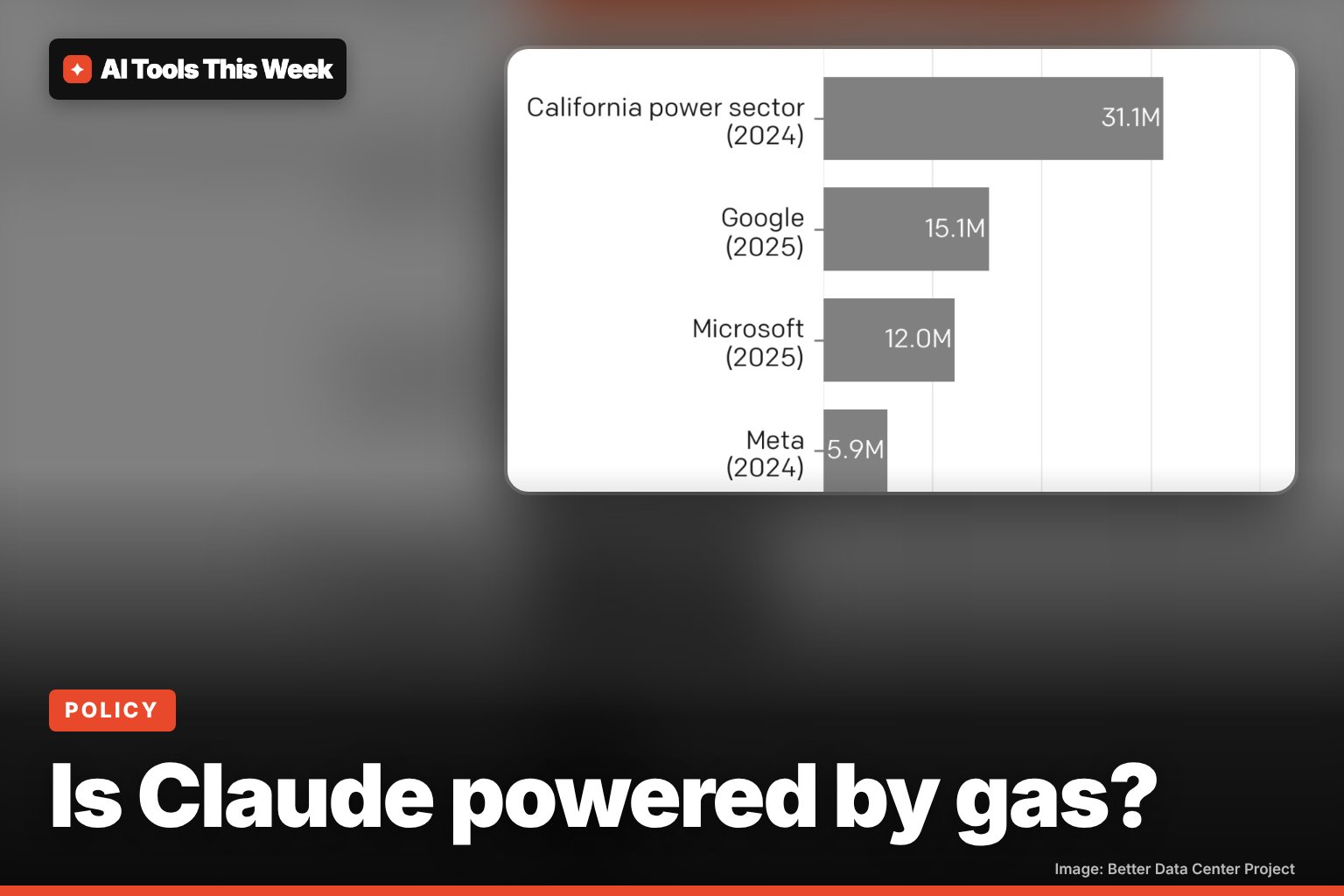
Is Claude powered by gas? The Anthropic 87% gas report explained
A Nov 16 report estimates 87% of Anthropic's power will come from gas and 11% from coal in 2028. What it found, what Anthropic has promised and what's unknown.
OpenAI perplexity limits: what its chief scientist proposed
OpenAI published its internal pretraining curve (GPT-4 at ~0.91, now below 0.8) and asked labs to agree on perplexity limits. What it means.
UC ChatGPT Edu deal: free ChatGPT for UC students from Dec 1
The University of California is paying OpenAI $1.2M a year so all 10 campuses get free ChatGPT Edu and Codex from Dec 1. What students get and the limits.